

That crack above the door is not going to fix itself
Baltimore Drywall Repair Pros hears the same stories every week in Baltimore.
A doorknob went through the bedroom wall, again. A crack opened along the ceiling seam and keeps getting longer.
The ceiling has a brown ring from a leak you fixed two years ago. The last guy's tape job is showing through the paint.
Small problems. But they stare at you every single day.
The longer you wait, the bigger the fix gets.
What we do about it
We are a Baltimore crew, and walls are our trade. We patch the holes.
We re-tape cracks so they stay shut. We cut out wet drywall and hang fresh board.
We hang, tape, and finish whole rooms, basements, and additions.
Then we sand it smooth and match your texture so the repair vanishes.
Drywall repair, drywall installation, taping and finishing.
Texture matching, popcorn ceiling removal, water damage rebuilds.
Our partner contractor is licensed and insured, with decades of drywall experience behind every job.
That is why homeowners across the region call us the #1 Drywall Contractor in the DMV.
See drywall installation and drywall repair.
See taping and finishing, texture, and popcorn ceiling removal.
Here is the part most folks do not expect
Once we are in your house with the walls opened up or freshly finished, about half our customers ask the same question: "While you are here, can you...?"
Paint the room. Paint the whole house.
Yes. We do that too.
Most of our drywall jobs end with us rolling paint. One crew, one call, no hunting for a painter.
And when the project grows from drywall into paint, we grow with it.
You called one crew. You should not need to call three more.
What we do
Drywall installation
New rooms, finished basements, additions, garage conversions. We hang the board, tape the seams, and finish it to paint-ready smooth.
See drywall installation.
Drywall repair
Holes from doorknobs, cracks along seams, dents, nail pops, water stains.
Most repairs take two short visits. See drywall repair.
Taping and finishing
The step that decides whether walls look good or not.
We tape, coat, and sand to a flat finish that takes paint evenly. See taping and finishing.
Texture and popcorn removal
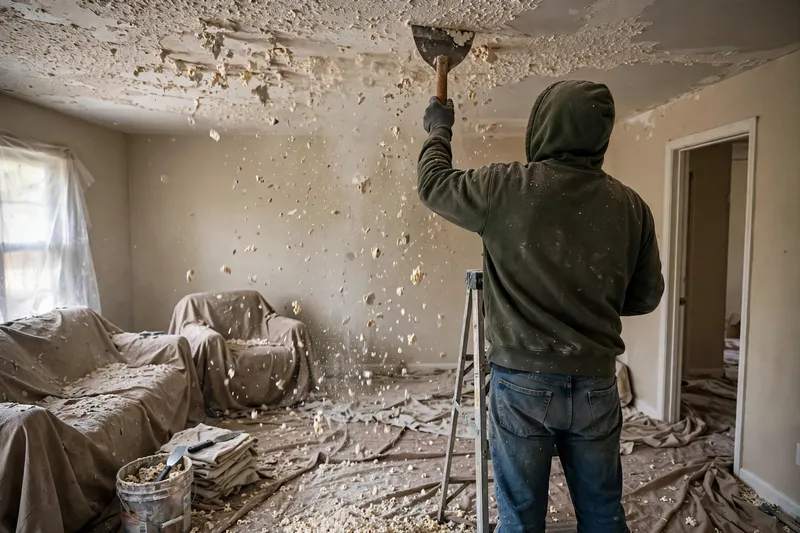
Orange peel, knockdown, or smooth. We also scrape off dated popcorn ceilings and refinish them flat.
See drywall texturing and popcorn ceiling removal.
Water damage and ceilings
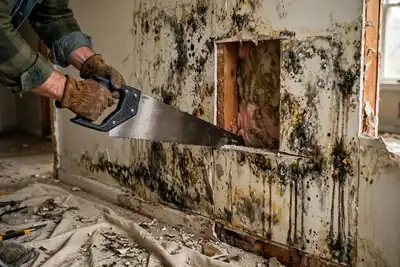
Wet drywall has to come out. Patching over it just hides mold food.
We cut it out, check behind it, and rebuild it right. See water damage drywall repair and ceiling repair.
Bathrooms, commercial work, and new construction
Bathrooms need moisture-smart board and tile-ready finishes — see bathroom drywall. We also run commercial drywall for offices and retail on your schedule, and new construction drywall for builders across the region.
Why the finish matters more than the board
Here is something most homeowners learn the hard way: the drywall panels are the cheap part. The finish is the job.
Two crews can hang the same board. One wall will look like glass while the other shows every seam under the paint.
The difference is in the mud work. It is how the tape is bedded, how many coats go on, and how carefully each coat is sanded.
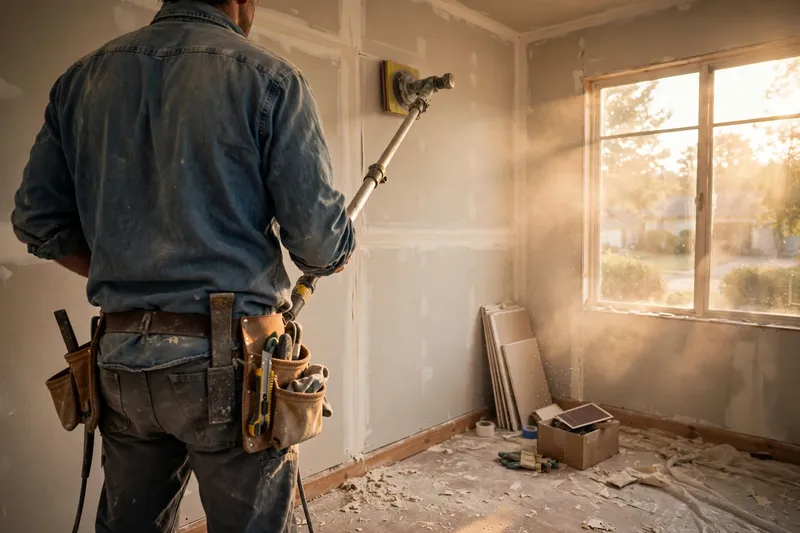
The final sanding is done with a light held at an angle, so flaws show up before the paint does.
We do all of that. It takes longer.
It is the reason our walls disappear and cheap work does not.
There are five standard finish levels in the trade, from Level 0 (bare board, temporary) to Level 5 (skim-coated glass-smooth).
Most homes want Level 4: smooth enough that paint looks even.
We explain drywall finishing levels in plain English so you know what you are paying for.
The problems we fix every week
- Holes. Doorknob holes, furniture dents, the occasional accident. Patched, taped, textured to match — gone.
- Cracks. Hairline cracks along seams or corners, usually from the house settling. We re-tape them properly so they do not come back.
- Water stains. Brown rings on ceilings from a past leak. If the board is solid and dry, we seal and refinish. If it stayed wet, it comes out.
- Nail pops. Little bumps where fasteners push through. Common in newer homes. We re-fasten and refinish the spots.
- Bad previous work. Visible seams, crooked corners, texture that does not match. We skim and refinish over it.
If you see any of these, our signs you need drywall repair guide explains what each one means.
New drywall: what a real job looks like
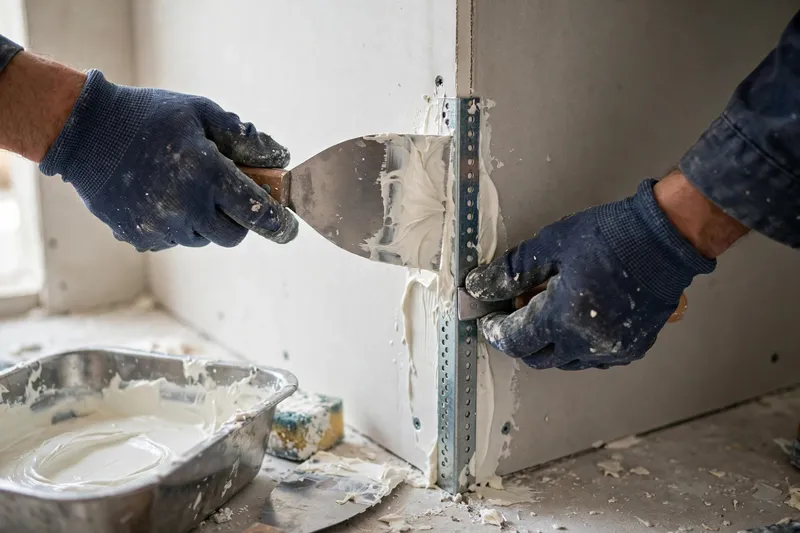
A proper installation runs in order. Hang the board, tape the seams, then three coats of mud.
Each coat goes on wider than the last. We sand between coats, add texture if you want it, and do a final check with angled light.
Rushing the drying between coats is how you get cracks later. Mud shrinks as it dries, and each coat needs its turn.
For basements and bathrooms, the board itself changes. We use moisture-resistant panels and the right gap detailing at the floor.
Regular board in a damp basement is a mold problem waiting to happen.
See basement drywall and our guide to types of drywall.
Wondering about timing? Our timeline guide lays out how long each kind of job really takes, and why.
What affects the price
Four things move the number: how much wall is involved, what condition it is in, what finish level you want, and how much of the job is repair versus new work.
A single patched hole and a whole-house hang are different universes. Most jobs fall somewhere between.
Nationally, small repairs often land in the low hundreds. Full-room hang-and-finish work often lands in the low thousands.
But your walls decide your number, not a national average.
A note on prices: material and labor costs move up and down, and no two jobs need the same work. Treat any numbers on this page as starting points, not quotes. Your written estimate after our free visit is the real number for your project.
Our drywall cost guide breaks down what drives the price.
Our cost calculator gives you a rough starting point from your room dimensions.
Texture: the look of your walls
After the mud work comes the surface you actually see.
Smooth walls are the modern standard. They are clean, and they show off paint color best.
Orange peel adds a subtle dimpled texture that hides minor flaws.
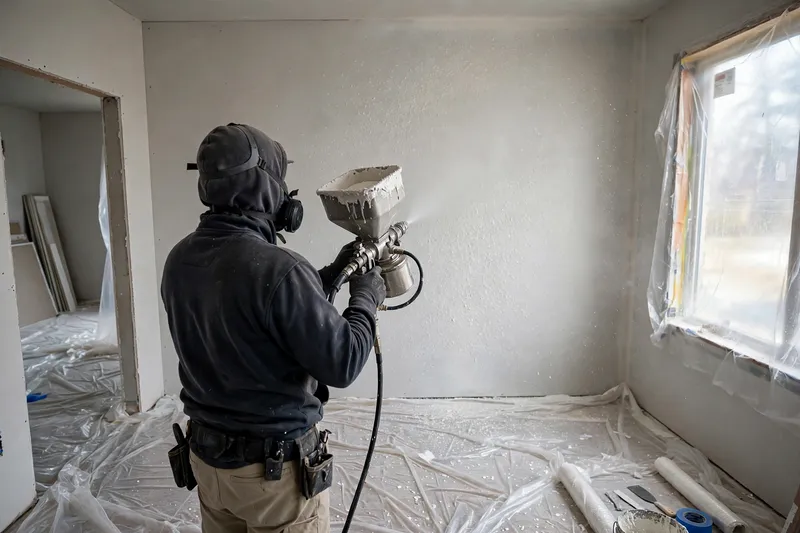
Knockdown is bolder, with a flattened stucco-like pattern common in many Maryland homes.
The rule that matters: match what is already there.
A smooth patch in the middle of an orange-peel wall will flash like a sign. We match your existing texture so repairs vanish.
Full detail at drywall texturing.
Where we work
We are based in Baltimore and work across the Baltimore area: Canton, Fells Point, Federal Hill, Highlandtown, Hampden, Roland Park, Charles Village, and the surrounding towns.
See the full list on our service areas page. Every town gets its own page with local notes.
The work, up close
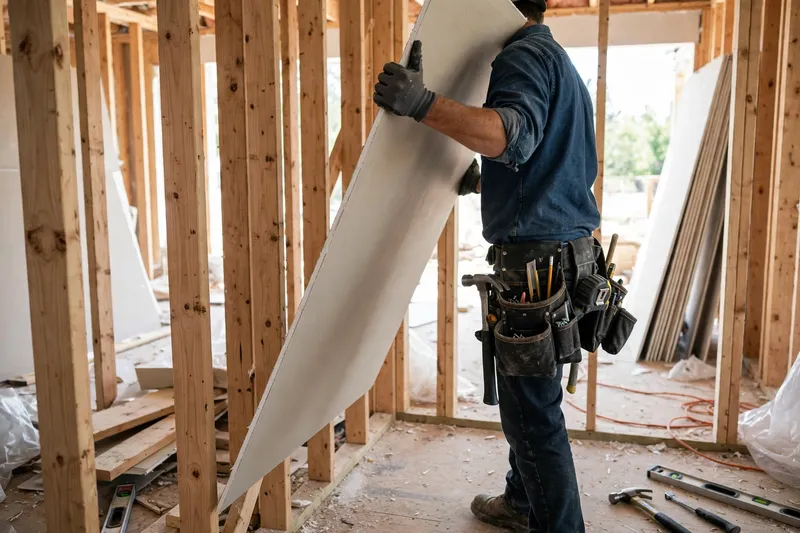
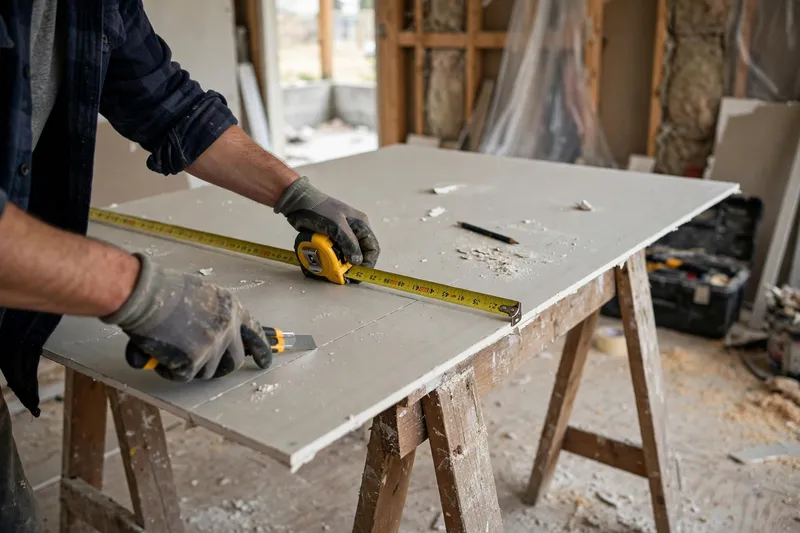
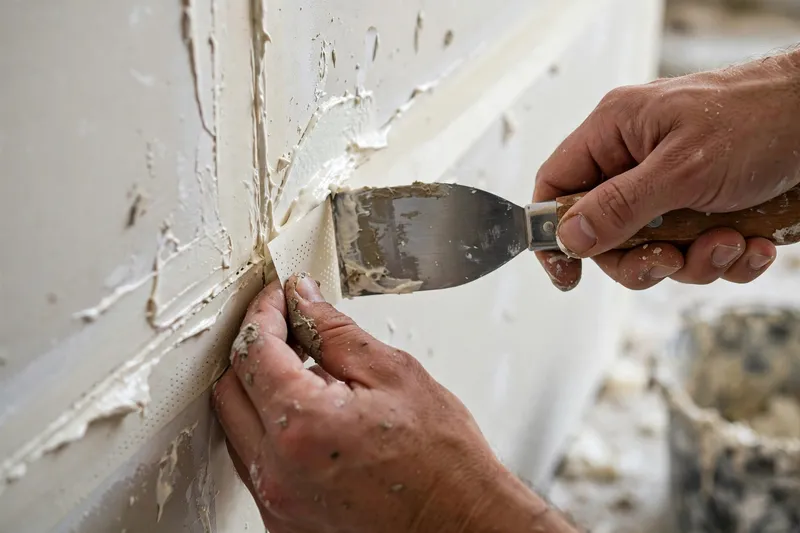
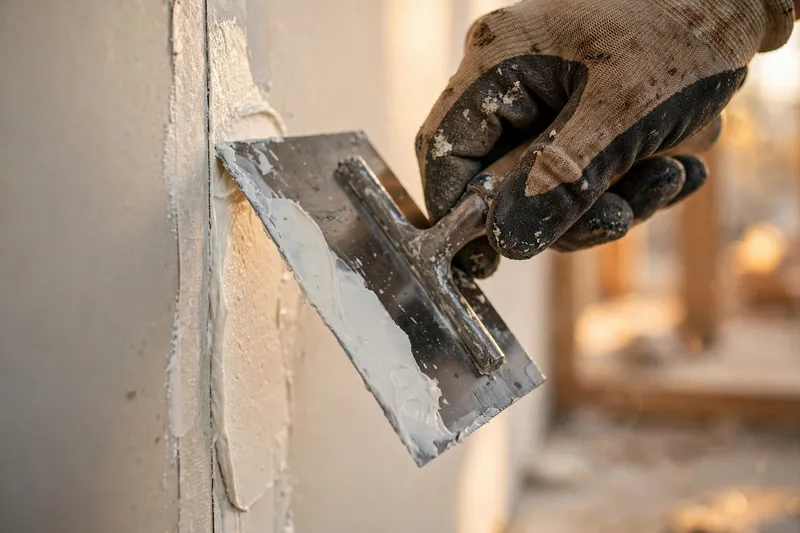
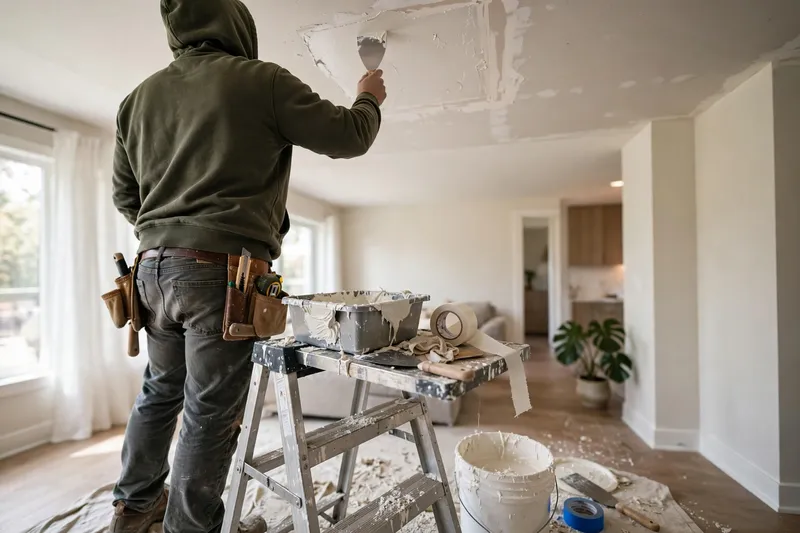
Drywall is a process: hang it straight, tape it tight, mud it wide, sand it smooth.
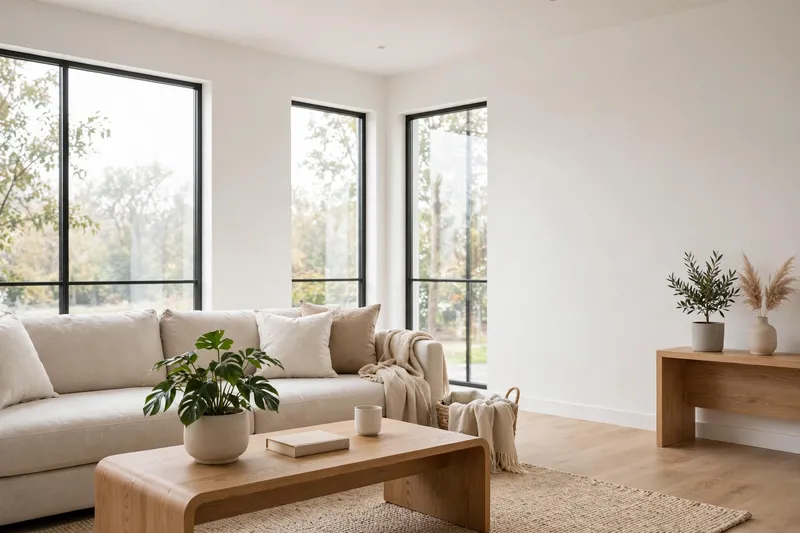
Here is what each step looks like. Photos show typical drywall work, not specific job sites.
Baltimore homes are different: rowhouses, plaster, and old walls
Half the houses we work in were built before drywall was common.
In Fell's Point, Canton, and Federal Hill, the walls are often plaster over wood lath: hard, thick, and unforgiving.
Plaster cracks differently than drywall. It patches differently, and it takes a different hand.
When plaster is solid, we usually skim-coat it smooth instead of tearing it out. It is faster and cleaner.
You keep the solidity and quiet that make old rowhouses feel like fortresses.
When it is crumbling off the lath, it comes down and drywall goes up in its place. We will tell you which one you have got during the free estimate.
Rowhouses bring their own quirks. Party walls shared with the neighbor mean we plan for noise and attachment.
Narrow staircases mean full 4-by-8 sheets do not always make the turn. We cut sheets down or work with 54-inch board.
Old framing is rarely straight, so we shim and float the board until the wall reads flat.
None of this is a problem. It is just Baltimore, and we work in it every day.
Historic districts and lead paint: two Baltimore realities
Fell's Point, Canton, Federal Hill, and other historic districts answer to Baltimore's historic preservation commission (CHAP).
The good news: interior drywall work almost never needs historic approval. CHAP governs what the street sees, not your living room walls.
If your project touches the exterior, we flag it before work starts.
Lead paint is the bigger deal. A huge share of Baltimore's housing stock went up before 1978, when lead paint was banned.
Federal EPA rules require lead-safe work practices whenever a renovation disturbs painted surfaces in a pre-1978 home. That means containment, careful cleanup, the works.
We follow those practices. We talk through it with you during the estimate so there are no surprises.
If you have small kids in the house, tell us up front and we plan around it.
What it costs in the Baltimore area
Starting points, not quotes. Your walls decide your number.
A small patch, like a doorknob hole, often lands in the low hundreds.
A medium repair, like a sheet-sized section or a water-damaged ceiling cutout, usually runs several hundred.
Hanging and finishing a standard room typically lands in the low thousands. High ceilings or heavy texture matching cost more.
Ceilings cost more than walls. Overhead work is slower, and the finishing has to be better.
Light rakes across a ceiling and shows everything.
Popcorn ceiling removal and refinishing is its own job, priced by the square foot, with the skim-coating doing most of the work.
Two Baltimore-specific cost drivers: plaster work and lead-safe practices both take more time than plain drywall. Older homes often need both.
That is real money. But it is cheaper than doing it wrong twice.
Same rule as everywhere on this site: these are starting points. Your written estimate after our free visit is the real number.
How a job runs, start to finish
1. You call or send the form. Tell us what is wrong: a hole, a crack, a stain, or a room that needs hanging.
Tell us where you are.
2. Free visit, written price. We look at the walls in person, measure everything, and check behind the problem.
We hand you one written number. No fee, no obligation.
3. We seal the area. Plastic sheeting goes up, floors get covered, and dust control runs during sanding.
Your house stays livable.
4. The work, in order. Hang, tape, three coats of mud with drying time between each, sand, texture to match.
Nobody rushes the mud. That is how cracks are born.
5. The angled-light walkthrough. We check every wall with a light held low across the surface before we call it done.
If a seam shows, we fix it then, not after the paint.
6. Paint, and whatever is next. Most customers have us roll the paint while we are there.
If the project grows from drywall into paint, we keep going. One crew, one call.
Mistakes that cost Baltimore homeowners real money
- Patching over wet drywall. If the board stayed wet, it has to come out. Patching over it hides mold food behind your wall.
- Hiring a handyman for finish work. Hanging board is easy; finishing invisible is the craft. This is the mistake that leaves visible seams under every coat of paint.
- Skipping primer. Fresh mud drinks paint unevenly and the joints photograph through as dull bands. Primer is cheap. Repainting is not.
- Signing without a written price. "It will be about..." is not a price. Get the number on paper before work starts.
- Taking the cheapest bid that skips texture matching. A smooth patch in an orange-peel wall flashes like a sign. Matching is part of the job, not an upgrade.
- Painting before the mud is dry. Trapped moisture bubbles and peels. Each coat gets its drying time — no exceptions.
- Fixing the stain but not the leak. If water is still getting in, the new drywall is just expensive wallpaper. Fix the source first.
How it starts
Send the form.
Tell us what is wrong: a hole, a crack, a stain, a room that needs hanging.
We come look, free. You get a written price.
Then you get smooth walls.
Check it yourself — or skip the homework
Do not take our word for it. Look at our work areas. Read the guides. Then compare us with any other drywall crew in the Baltimore area.
Or skip the homework. Send the form. We will come look at your walls for free. We will give you a price in writing. You get it before you spend a dollar.